Consumer Strategy · Omni-Channel Experience · Enterprise Alignment
Defining the Consumer Experience Vision for Optum
Aligning leadership and teams around a shared vision, purpose, and design foundation for the consumer — bringing the omni-channel experience vision to life.
The Challenge
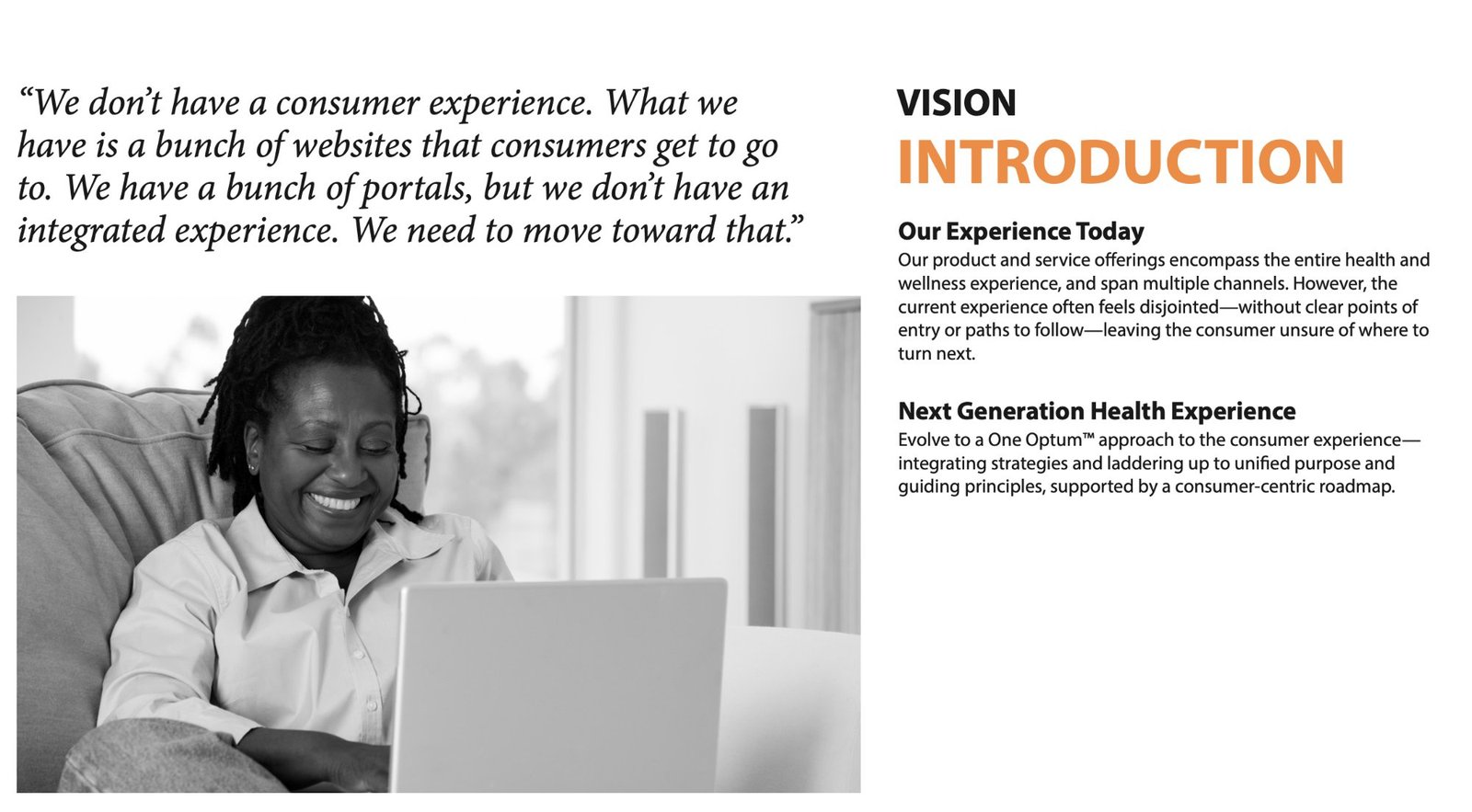
Historically, Optum operated with a strong B2B and B2B2C orientation, with limited emphasis on the end consumer. As one Optum leader put it: “We don’t have a consumer experience. What we have is a bunch of websites that consumers get to go to. We have a bunch of portals, but we don’t have an integrated experience. We need to move toward that.”
To shift the organization toward more human-centered thinking, I played a key leadership role in an enterprise-wide initiative to define Optum’s Consumer Experience Vision — a strategic foundation that would align teams, inspire design, and guide decision-making across the business.
The Approach
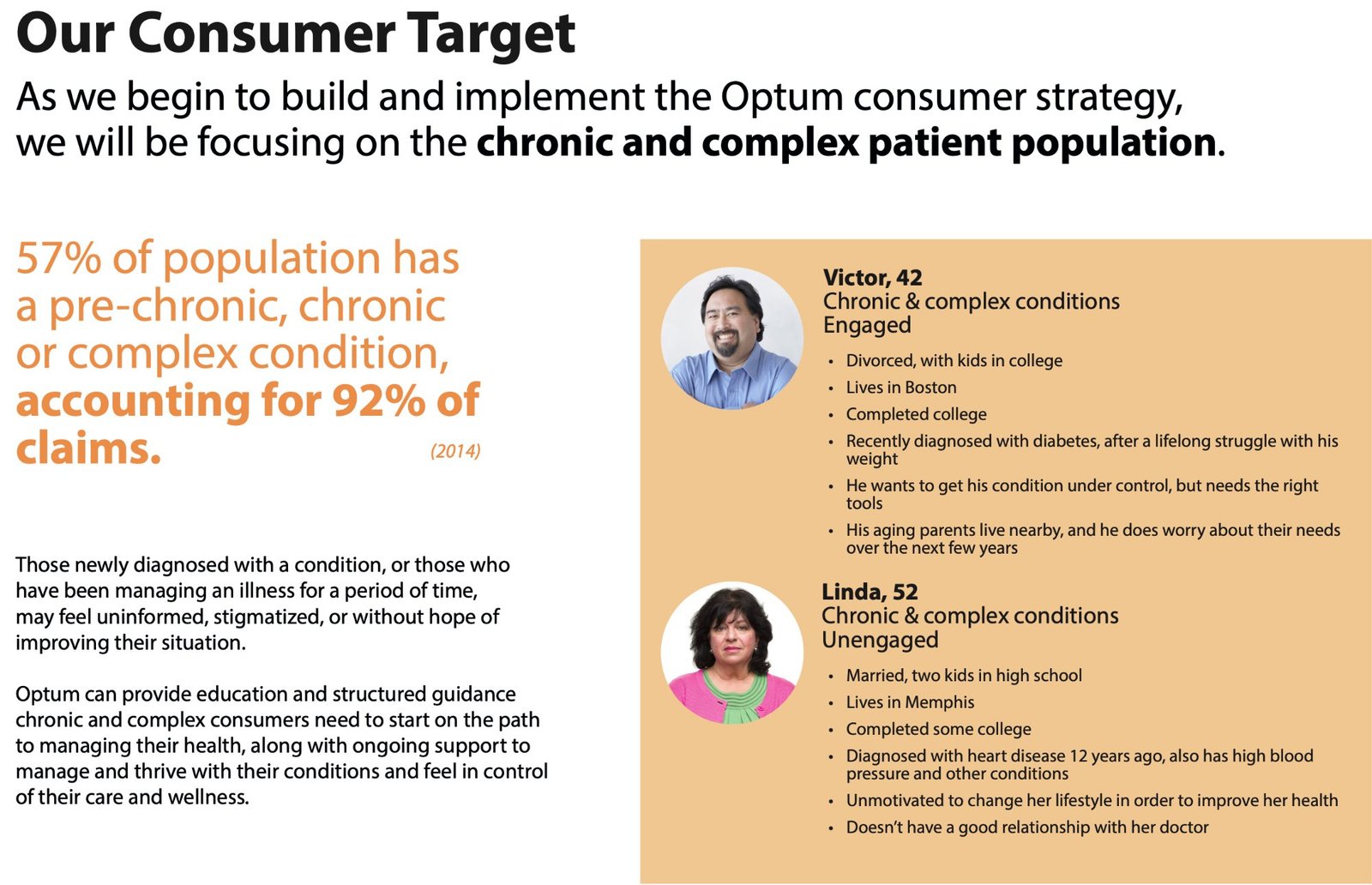
We partnered with our analytics team to develop a segmentation model, which we then used to conduct in-depth field research with real consumers. The insights fueled the development of rich, actionable personas — rooted in both qualitative and quantitative understanding — and designed to reflect the real needs, behaviors, and barriers of the people we serve.
To drive enterprise-wide alignment, we facilitated a series of executive workshops, which resulted in consensus around five key pillars:
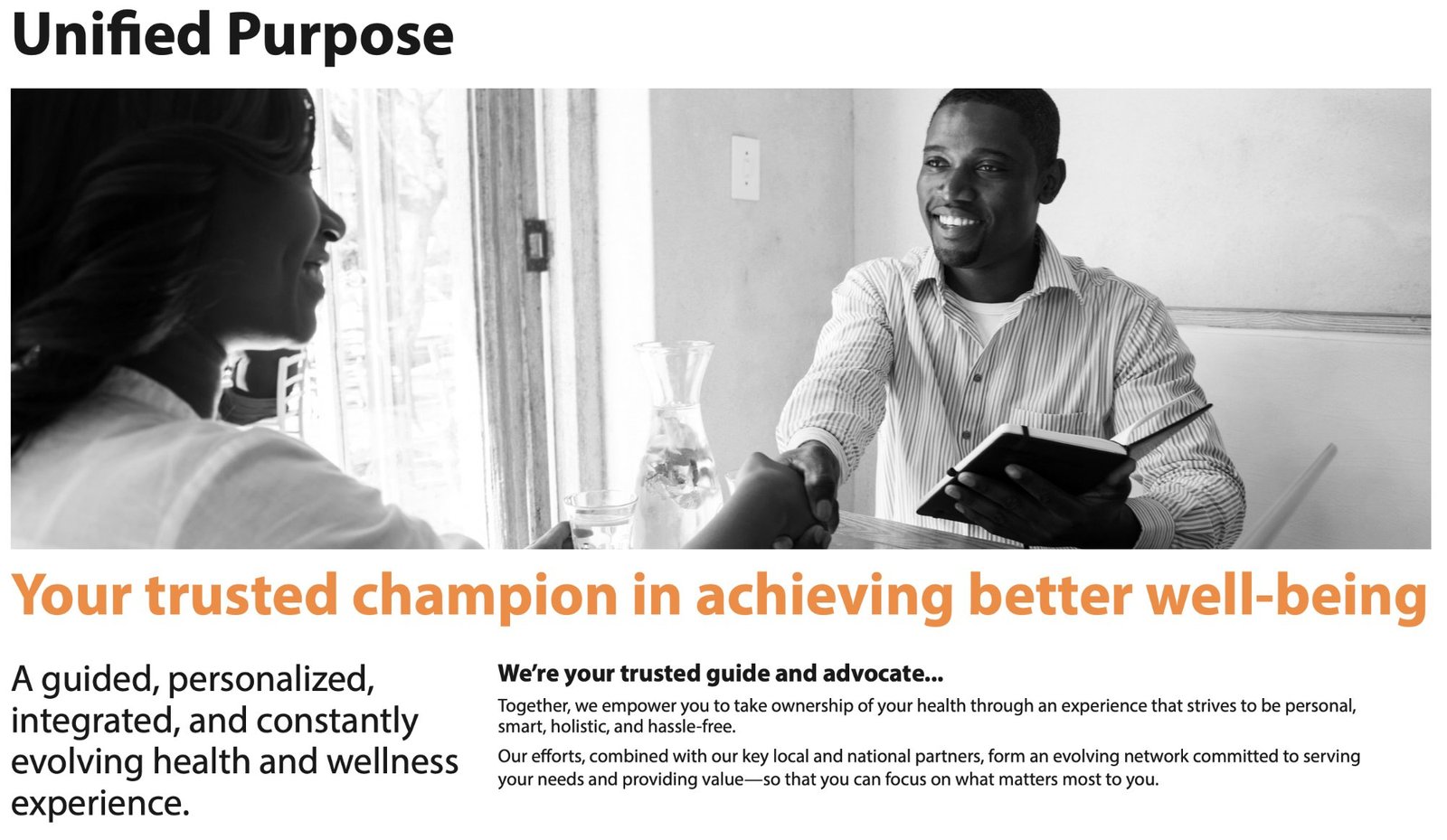
- A unified purpose
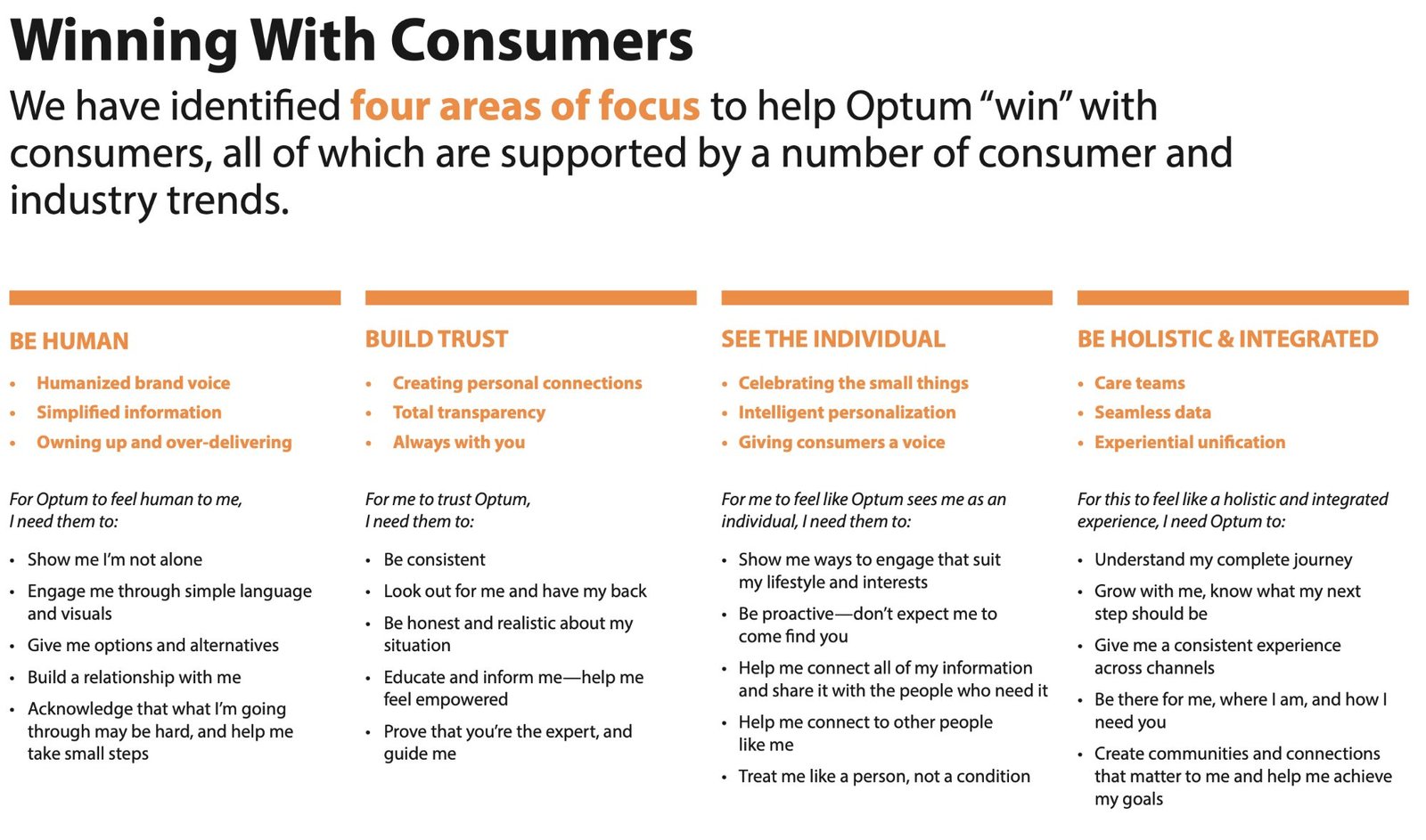
- A set of guiding experience principles
- Priority areas of focus
- Defined consumer targets / personas
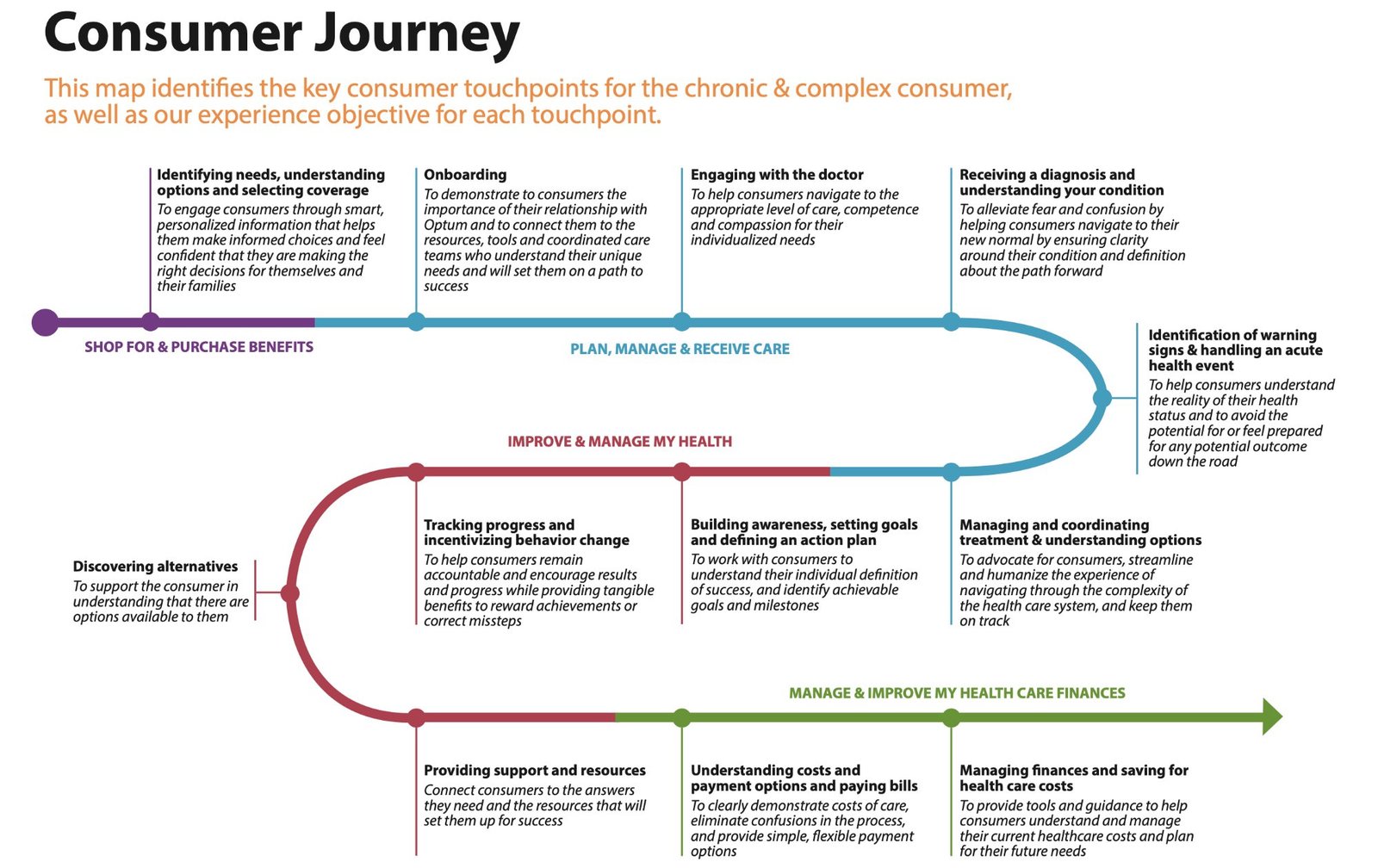
- A high-level consumer journey that identified key touchpoints and experience objectives across the lifecycle
Once the vision was defined, my team created a suite of artifacts — including persona cards, experience vision booklets, and posters — that were used throughout the organization. These tools served as the anchor for downstream service design and product strategy work, ensuring consistency, empathy, and alignment at every level.
This work laid the foundation for more coordinated, consumer-centered experiences across Optum — and positioned experience strategy as a critical lever for enterprise transformation.
Vision Artifacts
The following pages from the Consumer Experience Vision document illustrate the five pillars of the framework — from unified purpose and guiding principles through to consumer targets and the journey map.

Interested in working together?
The first conversation is always free. Tell me what you're working on.
Start a Conversation