Journey Mapping · Consumer Research · Empathy Tools
Making Consumer Insights Unforgettable
Building an interactive journey mapping capability that embedded the real voices of consumers and frontline staff — turning static artifacts into powerful tools for empathy, alignment, and action.
The Challenge
As the leader of an experience design team, I recognized a persistent challenge: our business partners often requested journey maps to showcase their specific product capabilities, but their perspectives were siloed. They rarely considered how their product fit within the broader consumer experience. As a result, the static journey maps we produced — while well designed — lacked the emotional resonance and organizational impact needed to drive meaningful change.
The Approach
To address this, I led the development of a scalable interactive journey mapping capability — a new organizational tool designed to deepen empathy, break down silos, and drive action across the enterprise. These interactive maps allowed business leaders to explore the end-to-end consumer experience in a dynamic way, embedding audio and video recordings from real consumers and frontline customer service agents directly into the journey.
The format created a new level of engagement: the novelty drew leaders in, but the emotional authenticity — hearing directly from members and employees — left a lasting impression. Unlike static maps, which were often quickly forgotten, these interactive tools were memorable and actionable. They helped leaders see the whole picture, better understand the pain points and disconnects in our ecosystem, and ultimately use the insights to inform cross-functional decisions.
What began as a response to a recurring challenge evolved into a powerful capability that enabled ongoing strategic alignment, empathy-driven design, and more cohesive consumer experiences across the organization.
Credit Where It’s Due
This capability wouldn’t have come to life without the creativity and problem-solving of Josh Bartelme, the designer who figured out how to make the vision real. Using a mix of design and interactive prototyping tools, Josh transformed a static map into an engaging, interactive experience — complete with embedded audio from consumers and frontline staff. Executives could easily access the experience via a secure link and password, enabling empathy-building at scale.
Accolades
Featured at UnitedHealth Group Innovation Day and recognized by EY as a leading corporate design team capability.
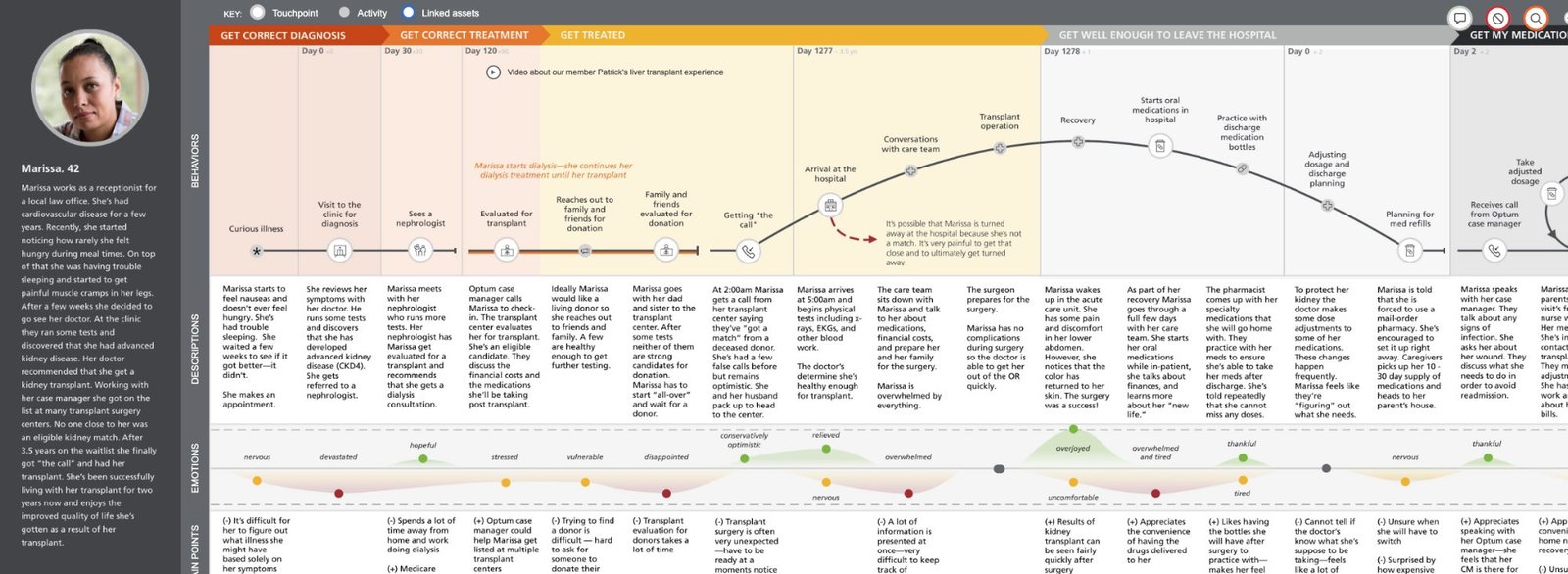
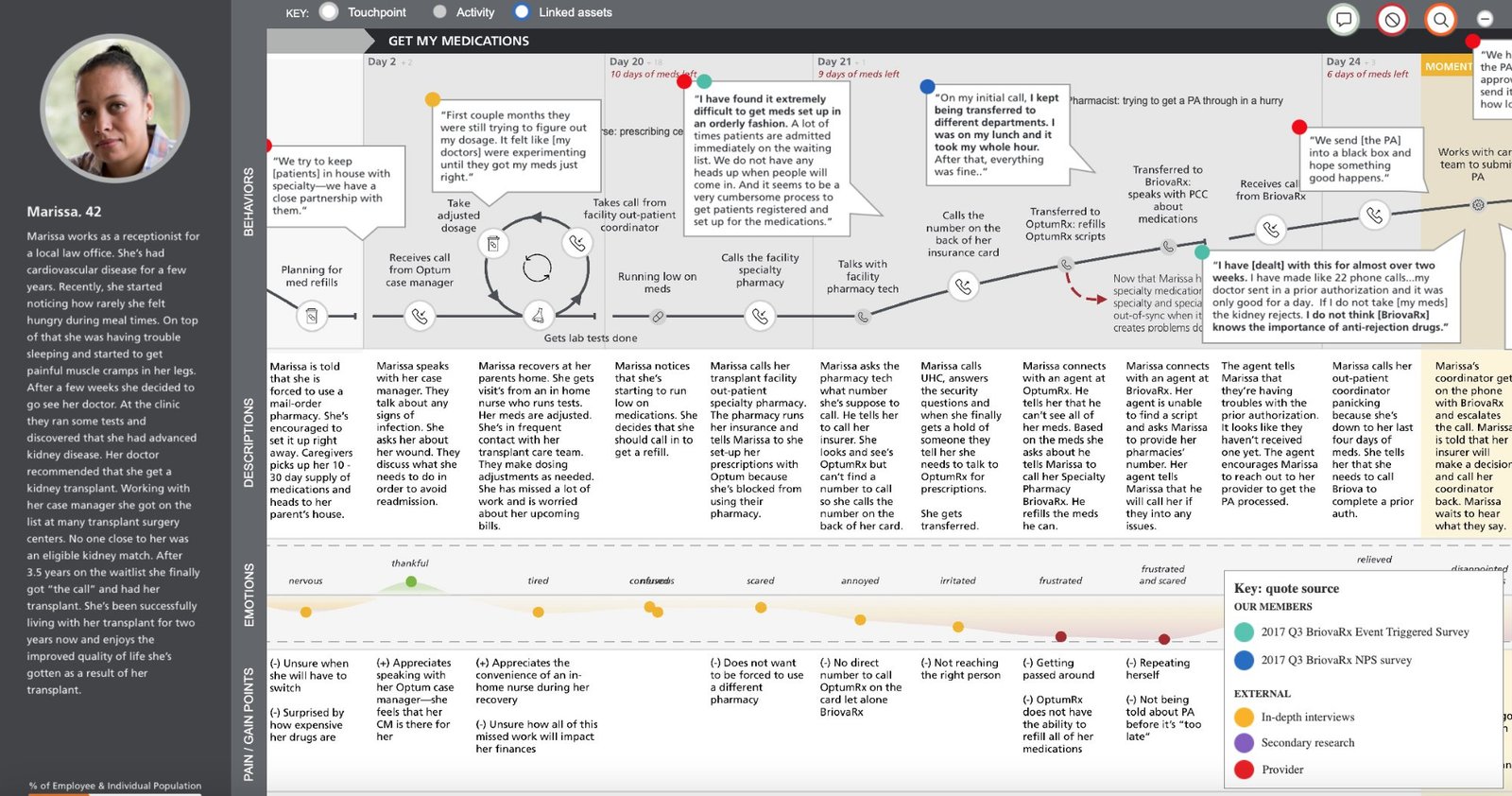
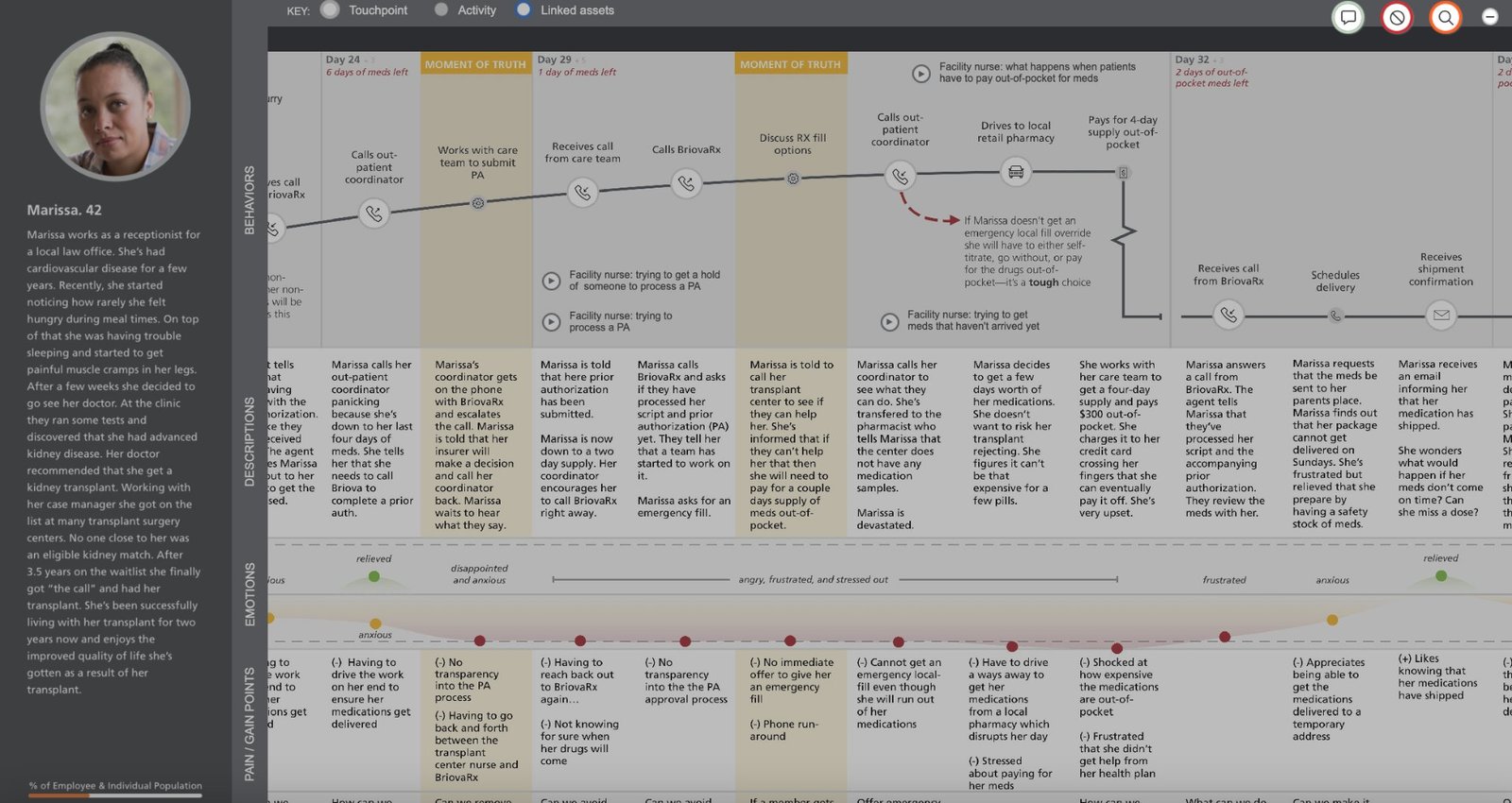
The Interactive Journey Map
The maps featured horizontal scrolling and interactive layers that revealed consumer insights, experience gaps, and opportunity areas. Real quotes from consumers and frontline staff were embedded throughout, surfacing emotion alongside behavior at every stage of the journey.
Interested in working together?
The first conversation is always free. Tell me what you're working on.
Start a Conversation